A dull ache in your jaw early in the morning. A clicking sound every time you open your mouth wide. Headaches that seem to start right at your temples and creep across your whole skull. These symptoms send people searching for answers, often after weeks of assuming the discomfort will go away on its own. Temporomandibular joint disorders, commonly called TMJ or TMD, affect the joint connecting your jawbone to your skull, and the discomfort can range from a minor annoyance to a daily disruption that interferes with eating, talking, and sleeping.
At Church Family Dentistry & Cosmetics, Dr. Will Church takes a listening-first approach to jaw pain, working to understand exactly what a patient is experiencing before recommending any course of treatment. We know that TMJ symptoms rarely show up in isolation. A patient might come in describing headaches, and only after a conversation do they realize their jaw has been clicking for months. Getting to the root cause matters more than treating a single symptom, and that starts with a real conversation about what you’re feeling.
What Causes TMJ Pain?
The temporomandibular joint is one of the most frequently used joints in the body, working every time you chew, speak, or yawn. Because of how much strain it absorbs day after day, it’s also one of the more vulnerable joints when something throws off its alignment or function.
Several factors commonly contribute to TMJ disorders. Teeth grinding or clenching, often related to stress, puts repeated pressure on the joint and surrounding muscles. Jaw injuries or trauma can damage the joint directly. Arthritis affecting the jaw joint, misaligned bites, and even prolonged poor posture can all play a role. In many cases, it’s a combination of factors rather than one single cause, which is part of why TMJ disorders can be tricky to diagnose without a thorough dental exam.
According to the National Institute of Dental and Craniofacial Research, TMJ disorders affect between 5% and 12% of the population, and the condition is at least twice as prevalent in women as in men. That’s a significant portion of the population dealing with jaw pain at some point, which is exactly why understanding the warning signs matters. [](https://www.nidcr.nih.gov/research/data-statistics/facial-pain/prevalence)
Common Symptoms to Watch For
TMJ pain doesn’t always announce itself clearly. Some patients notice a subtle clicking or popping when they open their mouth, while others experience a dull ache that radiates toward the ear or temple. Jaw stiffness in the morning, difficulty opening the mouth fully, and a jaw that seems to lock or catch are also common complaints.
It’s worth mentioning that TMJ symptoms often overlap with other conditions, which is why patients sometimes visit several providers before connecting their headaches or ear discomfort to the jaw joint itself. A few of the symptoms we hear about most often include:
- Clicking, popping, or grinding sounds when opening or closing the mouth
- Tenderness or pain around the jaw, ear, or temple
- Frequent headaches, particularly upon waking
- Difficulty or discomfort chewing certain foods
- A jaw that feels like it locks, catches, or shifts to one side
If any of these sound familiar, it’s worth having a conversation with your dentist rather than waiting to see if things improve on their own.
How We Diagnose and Treat TMJ Disorders
Every patient’s jaw pain has its own story, so we start with a conversation rather than jumping straight to a treatment plan. Understanding when the pain started, what makes it worse, and whether it’s tied to stress, grinding, or an old injury helps guide the right next steps. From there, a thorough exam of the jaw joint, bite alignment, and surrounding muscles gives us a clearer picture of what’s actually happening.
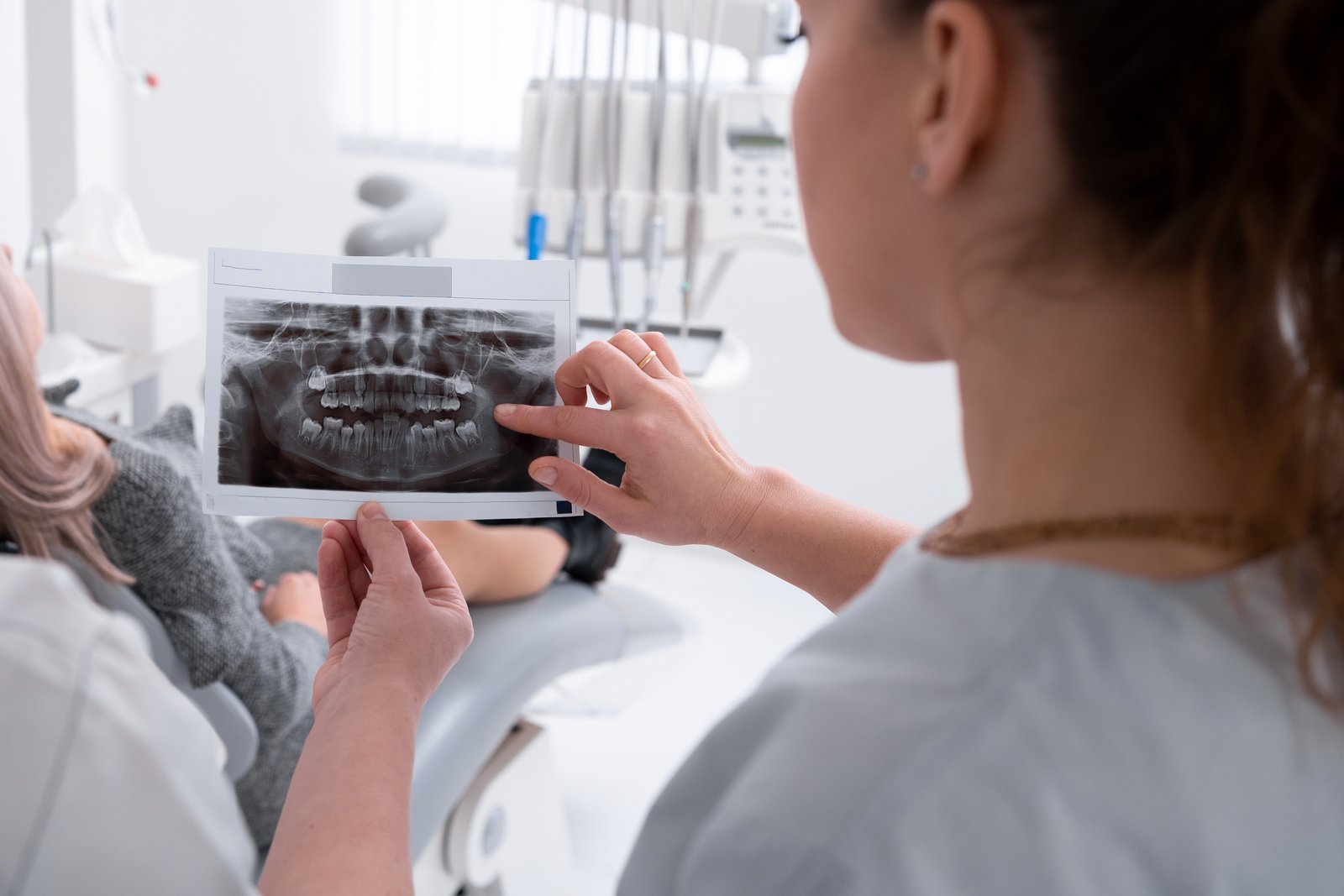
Dr. Church’s training at UNC included work with TMJ and airway-related concerns, and our advanced cone beam imaging allows for a detailed look at the joint and surrounding structures when needed. Treatment for TMJ disorders is rarely one-size-fits-all. For many patients, a custom-fitted night guard designed to prevent grinding and reduce pressure on the joint provides significant relief, especially when clenching happens during sleep. Other patients benefit from bite adjustments, physical therapy referrals, or a combination of conservative approaches before considering anything more involved.
We also see patients whose jaw pain connects to broader oral health concerns, which is part of why a comprehensive approach through general dentistry matters. Addressing misalignment, worn teeth, or bite issues alongside the joint itself often leads to more lasting results than treating the joint in isolation.
Finding Relief With Church Family Dentistry & Cosmetics
Living with jaw pain shouldn’t be something you simply adjust your life around. Whether it’s the clicking that’s started to bother you or headaches that keep showing up without explanation, there’s real value in having someone take the time to listen and figure out what’s actually going on. Dr. Church’s approach focuses on understanding each patient’s situation before recommending a path forward, so you never get a generic solution for a problem that’s uniquely yours.
If jaw pain, clicking, or persistent headaches have become part of your routine, we’d be glad to talk through what you’re experiencing and whether TMJ treatment might help. Reach out through our contact page to schedule a conversation with Dr. Church about your symptoms and what relief could look like for you.