
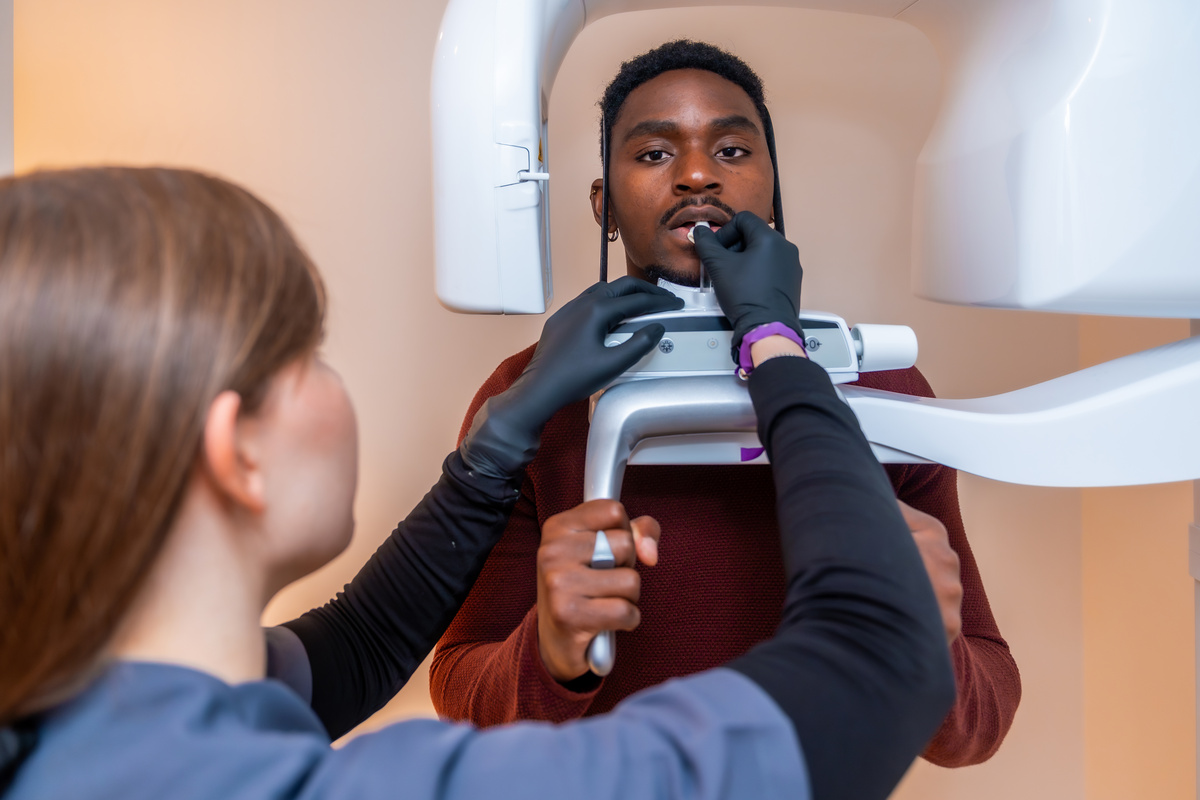
Dental technology has revolutionized the way dentists diagnose and treat oral health conditions, and cone beam imaging stands at the forefront of this transformation. This three-dimensional imaging system provides a level of detail that traditional X-rays simply cannot match, allowing dentists to see the complete structure of your teeth, jawbone, and surrounding tissues with remarkable clarity.
At Church Family Dentistry, Dr. Will Church uses advanced cone beam imaging as part of his commitment to providing patients with the most accurate diagnoses and effective treatment plans available. His training at UNC, combined with his passion for cutting-edge dental technology ensures that every patient benefits from this sophisticated diagnostic tool. Located near Duke Regional Hospital in Durham, the practice makes cone beam imaging readily accessible to patients who need comprehensive evaluation before complex dental procedures.
What Makes Cone Beam Imaging Different From Regular Dental X-Rays?
Traditional dental X-rays capture two-dimensional images of your teeth and jaw, which can make it difficult for dentists to visualize complex anatomical structures. Cone beam computed tomography overcomes this limitation by creating three-dimensional images that reveal every angle of your oral and maxillofacial region. The imaging system rotates around your head in a single pass, capturing hundreds of individual images that are then reconstructed into a detailed volumetric representation.
Research from the National Center for Biotechnology Information indicates that cone beam imaging has become a valuable and popular diagnostic tool in dentistry due to the growing need for three-dimensional visualization. The technology exposes patients to significantly lower radiation doses compared to medical CT scans while still providing the detailed imaging necessary for complex dental procedures. This balance between diagnostic capability and patient safety makes cone beam imaging an ideal choice for many dental applications.
How Does Cone Beam Technology Enhance Treatment Planning?
The following are ways cone beam imaging can improve treatment planning:
Implant Placement Precision
When planning dental implant procedures, cone beam imaging allows dentists to assess bone quality, measure bone height and width, and identify the exact location of nerves and sinuses. This comprehensive view ensures that implants can be placed in the optimal position without compromising important anatomical structures. For patients considering dental implants, this technology dramatically reduces the risk of complications and improves long-term success rates.
Root Canal Accuracy
Cone beam imaging helps dentists identify complex root canal systems, detect hidden canals, and evaluate the extent of infection or inflammation. The three-dimensional view reveals details that might be missed on traditional X-rays, enabling more complete and effective root canal treatment. This precision is particularly valuable when dealing with teeth that have unusual anatomy or previous root canal work that requires retreatment.
Surgical Planning
For patients who need oral surgery, cone beam imaging provides critical information about bone structure, tooth positioning, and the relationship between teeth and vital structures like nerves and blood vessels. Surgeons can use these images to plan the safest surgical approach and anticipate potential challenges before the procedure begins.
What Are the Benefits for Patients?
The advantages of cone beam imaging extend far beyond diagnostic accuracy. The scanning process itself is quick and comfortable, typically taking less than one minute to complete. Patients can sit or stand during the scan, and unlike medical CT machines, the equipment is compact and designed specifically for dental applications. The reduced radiation exposure compared to medical CT scans is another significant benefit, especially for patients who require multiple imaging sessions throughout their treatment.
Perhaps most importantly, cone beam imaging gives dentists the ability to detect problems early, when they are easier and less expensive to treat. The detailed three-dimensional views can reveal issues like bone loss, impacted teeth, jaw disorders, and other conditions that might not be visible on conventional X-rays. This early detection capability often prevents small problems from becoming dental emergencies that require immediate attention.
Experience the Difference Advanced Technology Makes at Church Family Dentistry
The integration of cone beam imaging into modern dental practice represents a significant advancement in patient care. By providing dentists with unprecedented visualization of oral structures, this technology enables more accurate diagnoses, safer procedures, and better treatment outcomes. The ability to see every aspect of your dental anatomy in three dimensions means fewer surprises during treatment and more predictable results.
Dr. Will Church and the team at Church Family Dentistry believe that every patient deserves access to the most advanced diagnostic tools available. Their state-of-the-art cone beam imaging system reflects this commitment to excellence and helps ensure that you receive the precise, personalized care you need. Whether you’re interested in cosmetic dentistry options like porcelain veneers or smile makeovers, or considering restorative treatments, advanced imaging technology plays a crucial role in planning your care. If you’re considering a complex dental procedure or want to learn more about how advanced technology can benefit your oral health, contact our office today to schedule a consultation.