
Reviewed by Dr. Will Church on September 22, 2026
Most patients researching tooth replacement already know the three main options: dental implants, bridges, and dentures. What’s harder to find is honest guidance on which one actually fits your specific situation — your timeline, your budget, your health, and how much disruption you’re willing to take on.
At Church Family Dentistry & Cosmetics in Durham, Dr. Will Church offers all three options and approaches the conversation without a preferred outcome. The right answer depends on the patient in the chair, not on which treatment generates the most revenue. This guide is built around the questions patients actually bring to that conversation.
If You Want the Most Durable Long-Term Solution
Implants are the answer here, and the research supports it clearly. A study published by the National Institutes of Health found a single-tooth implant survival rate of 91.4% with proper care — and the titanium post itself can last a lifetime. The crown attached to it typically lasts 15 to 25 years before normal wear may require replacement.
More importantly, implants are the only option that replaces the tooth root. Without a root — or something acting as one — the jawbone in that area begins to resorb. That bone loss changes your facial structure over time and reduces the feasibility of future implant placement. If you’re thinking in decades, not just years, implants are the option that holds up.
The trade-off is time. A single implant typically takes three to six months from placement to final crown, longer if bone grafting is needed first. For patients willing to invest that time, the long-term payoff is significant.
If You Need a Faster or Lower-Cost Solution for One or Two Teeth
A traditional bridge can replace one or two adjacent missing teeth without surgery and in a shorter timeframe — typically two to three appointments over a few weeks. It’s a fixed restoration, so there’s no removal at night and no adhesives required.
The cost of that convenience is the neighboring teeth. A bridge requires the adjacent healthy teeth on either side of the gap to be filed down and crowned to serve as anchors. That’s an irreversible alteration to teeth that weren’t previously a problem. Over time, those anchor teeth carry more load than they were designed for, which can lead to complications.
Bridges also don’t prevent bone loss at the site of the missing tooth. The jaw still resorbs without a root to stimulate it. For some patients — particularly those with budget constraints or a medical situation that makes surgery inadvisable — a bridge is the right call. But it’s a solution with a known expiration date (typically 10 to 15 years) and a downstream cost to the adjacent teeth.
If You’re Missing Most or All of Your Teeth
Traditional removable dentures are the most accessible entry point for patients with extensive tooth loss. They’re non-surgical, relatively affordable, and can be fabricated quickly. For patients whose health makes implant surgery inadvisable, or who simply aren’t ready for that commitment, dentures provide immediate function and appearance.
The limitations are real, though. Dentures rest on the gums rather than integrating with bone, which means they shift during eating and speaking as the jaw changes shape over time. Adhesives become increasingly necessary. And because the bone isn’t being stimulated, it continues to resorb — which is why dentures that fit well at first often stop fitting well years later.
Implant-supported dentures address most of those limitations. A small number of strategically placed implants anchor the denture securely, eliminating movement and preserving bone. For patients facing full-arch replacement, this is often the most practical path to a result that holds up long-term — the stability of implants without replacing every tooth individually.
If You’ve Been Told You Don’t Have Enough Bone
This is one of the most common reasons patients assume they can’t get implants. It’s worth revisiting. Bone grafting has become a routine part of implant dentistry — it rebuilds the volume needed to support a post and significantly expands who qualifies for implant placement. Patients who were told years ago that implants weren’t an option may find that’s no longer the case.
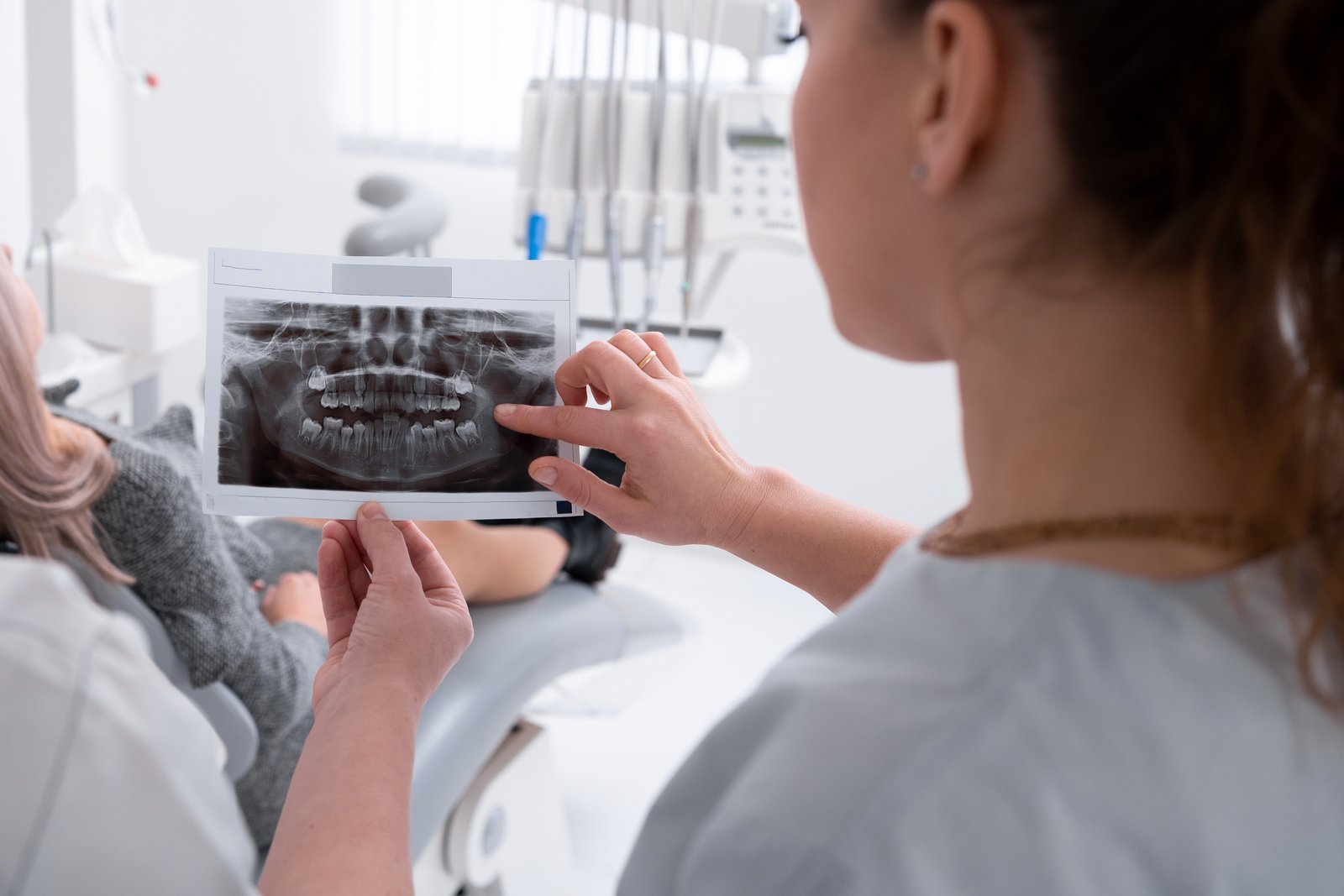
Dr. Church uses cone beam CBCT imaging to evaluate bone density and jaw anatomy in three dimensions before making any recommendation. That imaging gives a far more accurate picture than a standard X-ray, and it often shows more workable bone than patients expect.
If Cost Is the Primary Factor
Upfront cost runs roughly: dentures lowest, bridges in the middle, implants highest. But that framing leaves out the total cost over time. Dentures need relining or replacement every five to eight years. Bridges typically last 10 to 15 years and may eventually affect the anchor teeth. An implant post placed well can last a lifetime — only the crown needs eventual replacement.
For patients who are going to need tooth replacement for the next 30 or 40 years, the math on implants often looks different than it does at the point of initial treatment. At Church Family Dentistry, financing is available through Cherry, Sunbit, and Proceed to spread the cost of implant treatment into manageable monthly payments. Some insurance plans also cover a portion of implant-related treatment depending on the plan.
If You’re Anxious About Surgery
Implant placement is a surgical procedure, and some patients arrive with significant anxiety about that. It’s worth knowing that most patients find the experience more manageable than they anticipated — the area is numbed thoroughly with local anesthesia, and sedation dentistry is available for patients who want a more relaxed experience. Mild soreness and swelling in the days following placement are normal and typically well-controlled.
For patients who genuinely cannot or prefer not to undergo surgery, bridges and dentures remain valid options. The goal of this conversation is always to find the right fit for your situation, not to push toward the most involved treatment.
How Dr. Church Approaches the Decision
The consultation at Church Family Dentistry starts with your situation — how many teeth are missing, how long they’ve been gone, what your bone looks like on imaging, what your health history includes, and what your goals and constraints are. From there, Dr. Church lays out which options apply to your case and what the honest trade-offs are for each one. As a member of the American Academy of Implant Dentistry (AAID), he brings a level of implant-specific training to that conversation that goes beyond general dental licensure.
If you’re ready to understand your options in detail, contact our Durham office to schedule a consultation with Dr. Church.
Frequently Asked Questions: Implants, Bridges, and Dentures
Can I switch from dentures to implants later?
Yes, in many cases. The main consideration is bone volume — wearing dentures doesn’t prevent bone loss, so patients who have worn them for a long time may have less bone remaining than ideal for implant placement. Bone grafting can often rebuild what’s needed, but the longer you wait, the more complex that process becomes. If you’re currently in dentures and thinking about implants, it’s worth having a consultation sooner rather than later to understand what’s still feasible.
Is a bridge a permanent solution?
A bridge is fixed — it’s cemented in and not removed daily. But it’s not permanent in the way an implant is. Bridges typically last 10 to 15 years before wear, decay around the margins, or complications with the anchor teeth require attention. The alteration made to the anchor teeth to place the bridge is permanent, however. Those teeth will always need crowns going forward regardless of what happens to the bridge itself.
What’s the difference between implant-supported dentures and regular dentures?
Regular dentures rest on the gums and rely on suction or adhesives to stay in place. They shift during eating and speaking and become progressively less stable as the jaw changes shape from bone loss. Implant-supported dentures snap onto or are fixed to implant posts in the jaw, eliminating movement and preserving bone. The experience is substantially different — most patients describe implant-supported dentures as feeling far more like natural teeth than conventional dentures do.
How do I know which option is right for me without coming in for a consultation?
You can narrow it down based on the factors in this guide, but you can’t fully know without imaging. Bone volume, gum health, and the condition of adjacent teeth all factor into which options are actually viable for your specific case — and none of those can be assessed without a clinical evaluation. The consultation at Church Family Dentistry includes cone beam imaging and a detailed conversation about your goals, so you leave with a clear picture of what’s available to you and what the realistic trade-offs are.
About the Author
Dr. Will Church
Church Family Dentistry & Cosmetics, Durham, NC
Dr. Will Church is the dentist and founder of Church Family Dentistry & Cosmetics in Durham, North Carolina. Trained at UNC School of Dentistry, Dr. Church focuses on implant dentistry, cosmetic dentistry, and restorative care for patients throughout the Triangle area. His patient-centered philosophy prioritizes understanding each person’s goals before recommending any treatment.