
Medically Reviewed by Dr. Will Church, DDS on September 23, 2026
Your smile is one of the first features people notice, and if chipped, stained, or uneven teeth have been holding yours back, porcelain veneers may be the solution you’ve been looking for. The great news is that with proper care, porcelain veneers can last well over a decade, and for many patients, much longer than that. Knowing what shapes their lifespan helps you invest with confidence.
At Church Family Dentistry in Durham, Dr. Will Church takes a genuinely personalized approach to cosmetic care. Before recommending porcelain veneers or any other treatment, he takes the time to fully understand your goals and make sure you feel informed every step of the way. His training at UNC and commitment to advanced dental technology mean your results are built to last.
What the Research Says About Veneer Longevity
Porcelain veneers have a well-documented track record of durability, and the clinical evidence is encouraging. A 2021 systematic review from the National Institutes of Health, which analyzed 25 clinical studies and over 6,500 veneers, found that the 10-year estimated cumulative survival rate of porcelain laminate veneers was 95.5%. That’s a strong outcome, and it reflects the continued advancement of both porcelain materials and bonding techniques.
For most patients, veneers last anywhere from 10 to 20 years before replacement may be needed. Several factors influence where you fall on that spectrum, and many of them are within your control.
What Affects How Long Veneers Last
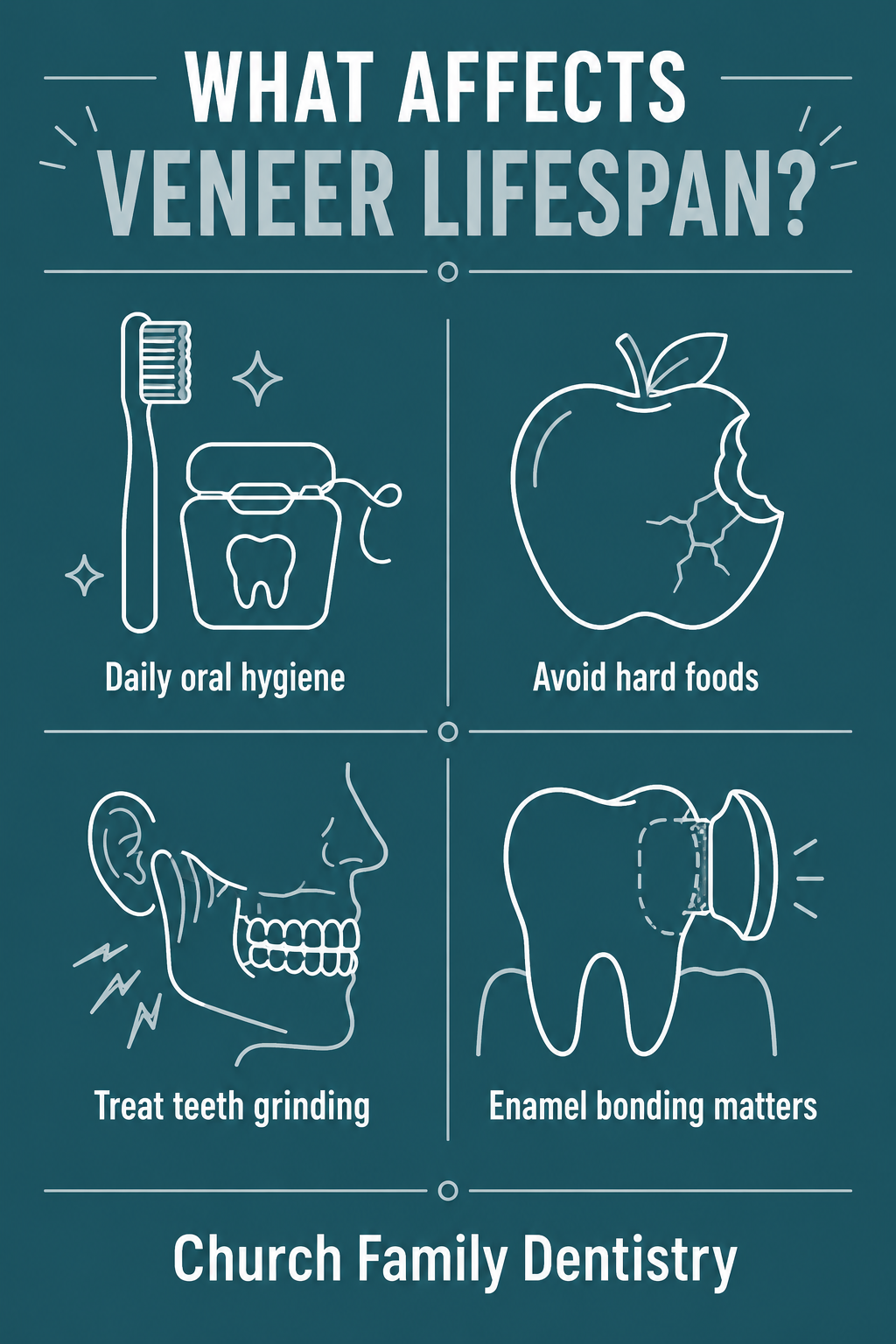
The lifespan of your veneers depends on both how they are placed and how well they are cared for over time. These are the key factors that play a role:
- Oral hygiene habits: Brushing twice daily and flossing consistently protect the tooth structure beneath each veneer, which is essential to their long-term stability.
- Dietary choices: Frequently biting down on hard foods, like ice, hard candies, or crusty bread, can chip the porcelain over time.
- Teeth grinding (bruxism): Patients who clench or grind their teeth put sustained pressure on veneers, which can accelerate wear.
- Placement quality: Veneers bonded primarily to enamel rather than dentin have significantly higher survival rates, making your provider’s technique a major factor.
Each of these areas can be addressed with the right habits and guidance from your dental team.
How Proper Placement Supports a Longer Lifespan
The skill and care of your cosmetic dentist is one of the strongest predictors of how well your veneers hold up over time. A conservative, preservation-focused approach to tooth preparation keeps more natural enamel intact, which directly supports better bonding and a longer-lasting result.
Technology in Precision
Dr. Church’s use of advanced technology, including a cone-beam imaging unit and smile-design technology, enables more accurate treatment planning before veneers are placed. Smile design tools allow patients to preview their outcomes in advance, which means more targeted results and fewer surprises. That level of planning contributes to veneers that fit well, bond properly, and stand the test of time.
How to Make Your Veneers Last as Long as Possible
Protecting your veneers long-term does not require a complicated routine. Attending regular dental exams and cleanings is one of the most effective things you can do, as routine visits allow Dr. Church to monitor your oral health and catch early signs of wear before they become larger problems.
If you grind your teeth at night, a custom mouthguard can significantly reduce the stress placed on your veneers while you sleep. Avoiding habits like biting your nails, chewing on hard objects, or using your teeth to open packaging also makes a real difference over the years.
Get Lasting Results With Porcelain Veneers at Church Family Dentistry
Porcelain veneers are a meaningful investment, and the right provider makes all the difference in how long that investment pays off. At Church Family Dentistry, Dr. Church combines advanced technology with a genuine commitment to patient care, ensuring that every cosmetic treatment is thoroughly planned and precisely executed. Whether you are exploring veneers on their own or as part of a broader smile makeover, you will receive honest, detailed guidance from start to finish.
Our cosmetic dentistry services are designed around your individual smile goals, and we offer flexible financing through Cherry, Sunbit, and Proceed to make your treatment accessible. When you are ready to take the next step toward a smile that lasts, contact our team to schedule your consultation.
How long do porcelain veneers typically last?
With proper care, porcelain veneers typically last 10 to 20 years. A 2021 systematic review published by the National Institutes of Health, which analyzed 25 studies covering more than 6,500 veneers, found a 10-year survival rate of 95.5 percent. Longevity depends on several factors, including oral hygiene habits, dietary choices, whether teeth grinding is present, and the quality of the original placement.
Does teeth grinding shorten the lifespan of veneers?
Yes, bruxism accelerates wear on the porcelain. However, grinding does not automatically disqualify someone from getting veneers. A custom nightguard substantially reduces the stress placed on the restorations while sleeping, and Dr. Church discusses this with any patient where grinding is a concern. Managing the habit is an important part of protecting the long-term investment.
What is the most important factor in making veneers last as long as possible?
Placement quality is one of the strongest predictors of longevity. Veneers bonded primarily to enamel rather than dentin have significantly higher survival rates, which is why provider technique matters so much. Beyond placement, consistent oral hygiene, regular checkups, and avoiding habits like chewing on hard objects or using teeth as tools also play a meaningful role in how long veneers hold up.
Can veneers be repaired if they chip or crack?
Small chips may be repairable in some cases, but a significantly damaged veneer typically needs to be replaced rather than patched. Unlike composite resin, porcelain cannot be bonded or filled the same way. Regular checkups allow Dr. Church to catch early signs of wear before they become larger problems, and addressing issues promptly helps extend the overall lifespan of the restoration.
ABOUT THE AUTHOR
Dr. Will Church, DDS
Dentist at Church Family Dentistry & Cosmetics, Durham, NC
Dr. Will Church earned his dental degree from UNC School of Dentistry and founded Church Family Dentistry & Cosmetics in Durham, NC. He uses advanced cone beam imaging technology and takes a patient-first approach to every treatment, listening carefully before recommending any procedure. Dr. Church serves the Durham community with comprehensive cosmetic and restorative dental care.